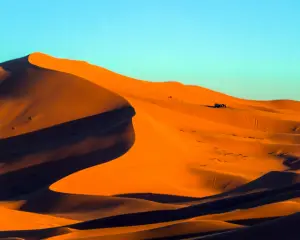
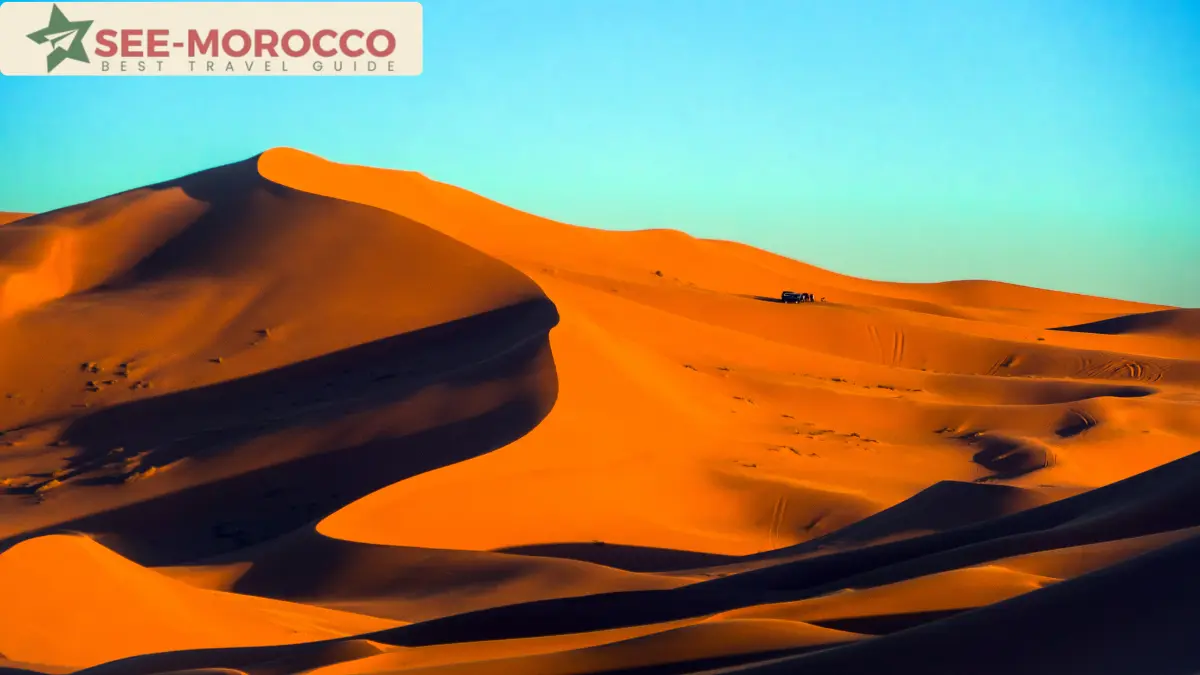
I’ll start with the thing most travel blogs get wrong: the “Morocco desert” you see in photos — the giant orange dunes, the camel caravans at sunset — is a small part of a very large, mostly rocky region. If you book a tour expecting three days of rolling sand, you’ll spend most of it driving through stony plateaus wondering when the movie scenery starts.
I’m from Ouarzazate, the city every desert tour passes through on its way south from Marrakech. I’ve grown up around this industry — the 4x4s, the camel camps, the tour operators good and bad. This guide is what I’d tell a friend before they book anything.
Where the Morocco Desert Actually Begins
Cross the High Atlas from Marrakech and the landscape changes fast. South of the mountains you’re in the pre-Sahara: dry valleys, palm oases, flat-topped hills, and kasbahs the color of the earth they’re built from. This is where I live.
The true sand desert — the part with the big dunes — starts much further out. Morocco has two main dune fields worth traveling for, and the difference between them shapes your entire trip.
Erg Chebbi vs Erg Chigaga: The Choice That Defines Your Trip
This is the decision nobody explains properly, so let me do it.
Erg Chebbi (Merzouga)
Erg Chebbi is the famous one. The dunes rise up to about 150 meters near the village of Merzouga, and the tallest of them glow deep orange at sunrise. This is where most tours go.
The advantages are real: the dunes are dramatic, the village sits right at their edge (you can walk from your hotel into the sand), and the infrastructure is complete — hotels, camps at every budget, ATMs, paved road all the way.
The trade-off is crowds. In high season, sunset on the main dune line feels like a shared event, not a private one. Quad bikes run during the day. Some camps play music at night.
Erg Chigaga (M’Hamid)
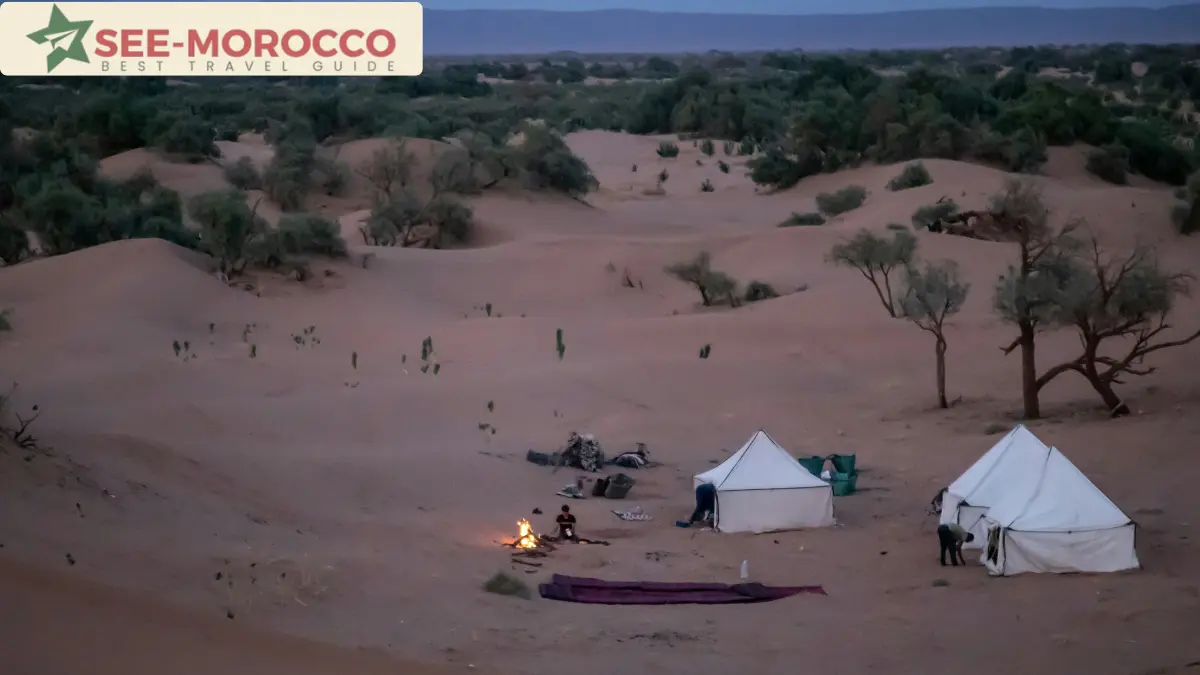
Erg Chigaga is the wilder option. The dune field is larger than Chebbi but lower, and it sits about 60km past M’Hamid at the end of the Draa Valley — the last 2 hours are off-road only. No paved access, no village at the edge, far fewer people.
If your image of the Sahara is silence and emptiness, Chigaga delivers it. The cost is time and money: the off-road transfer makes it more expensive, and you need at least 2 nights to make the journey worthwhile.
My honest take
First trip to Morocco, limited time: Erg Chebbi. The logistics are simpler and the dunes are taller. Second trip, or if you genuinely want solitude: Erg Chigaga, and give it the extra night it needs.
The Two Routes South (and Why the Drive Is the Point)
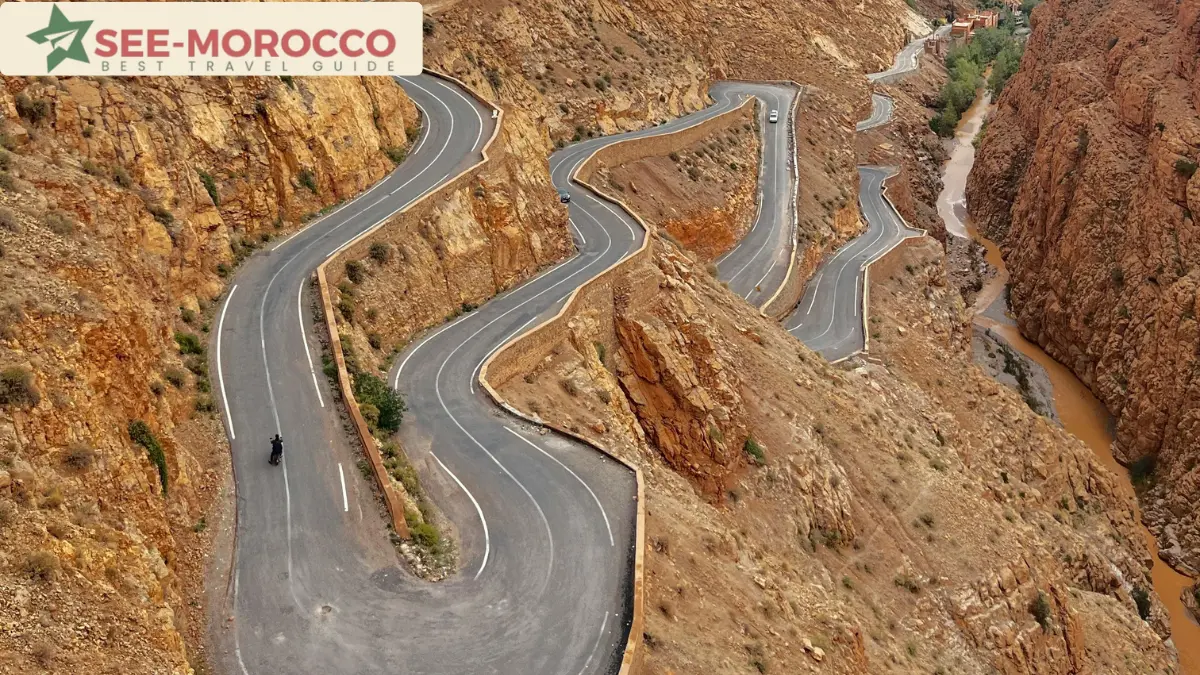
Both dune fields are reached from Marrakech through Ouarzazate, over the Tizi n’Tichka pass. From my city, the routes split:
To Erg Chebbi: east through Skoura’s palm grove, the Dades Valley, Todra Gorge, then south through Erfoud to Merzouga. Around 6-7 hours of driving from Ouarzazate, but the road passes some of the best scenery in the country. This is the “Route of a Thousand Kasbahs.”
To Erg Chigaga: south down the Draa Valley through Agdz and Zagora to M’Hamid, then off-road. The Draa is Morocco’s longest river valley and its palm groves run for over 100km — in my opinion one of the most underrated drives in the country.
A mistake I see constantly: people treat the drive as dead time and sleep through it. The drive is half the trip. Ask your driver to stop. The viewpoints over the Draa from the Tizi n’Tinififft pass cost nothing.
Real Costs in 2026
Prices vary enormously by season and how you book, but as honest ranges:
Shared 3-day tour from Marrakech to Merzouga (minibus, standard camp, camel ride included): roughly 1,200-2,500 MAD per person. The cheapest deals sold around Jemaa el-Fnaa often cut corners — long days, rushed stops, camps far from the good dunes.
Private 3-day tour: from around 4,500-8,000 MAD per vehicle depending on the camp level.
Doing it yourself: Supratours runs a direct bus from Marrakech to Merzouga (around 200-250 MAD, roughly 12 hours). From Merzouga village, you book a camel trek and camp night directly — typically 350-700 MAD for a standard camp, 1,500+ for luxury camps with real beds and private bathrooms.
Luxury desert camps: 2,000-5,000+ MAD per night. At the top end you get duvets, heaters in winter, and proper food. Whether that’s the point of the Sahara is your call.
The DIY route saves real money if you have time. The tour saves logistics if you don’t.
When to Go (and When the Desert Will Hurt You)
I’ve written a full guide on the best time to visit Morocco, but for the desert specifically:
October to early December and March to early May are the safe windows. Warm days, cool nights, no extremes.
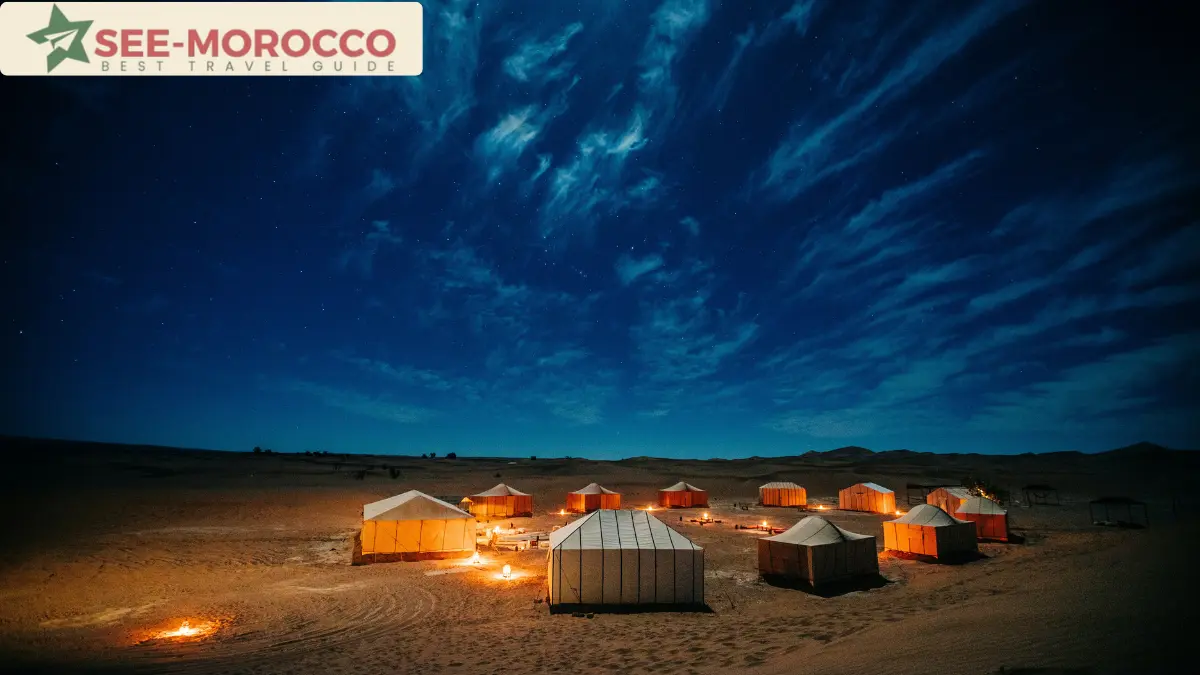
December and January look pleasant in photos and are brutally cold at night. Desert temperatures drop below freezing after dark — I’ve seen it hit -2°C and lower. Standard camps have blankets, not heating. If you go in deep winter, ask specifically whether the camp has heated tents, and pack a real jacket.
Winter has another risk nobody mentions: rain. It’s rare here, but when it falls, the dry riverbeds (oueds) that the southern roads cross turn to mud fast.
This past March, a French couple got their car stuck in the mud in a valley near Ouarzazate. It took the help of people from the nearby village to pull it out. That’s the other side of late-winter travel in the south — and also, honestly, the other side of Morocco: the village didn’t hesitate.
June through August is dangerous heat. Daytime can pass 45°C in the dunes. Tours still run, but the experience compresses into dawn and dusk, and the middle of the day is something you survive rather than enjoy.
Sandstorm season peaks in spring. A windy day in the erg means sand in your eyes, your food, and your camera. It’s part of the desert; bring a scarf (a cheap cotton chech from any souk works better than sunglasses).
What the Tour Brochures Don’t Mention
A few honest notes from someone who watches this industry up close:
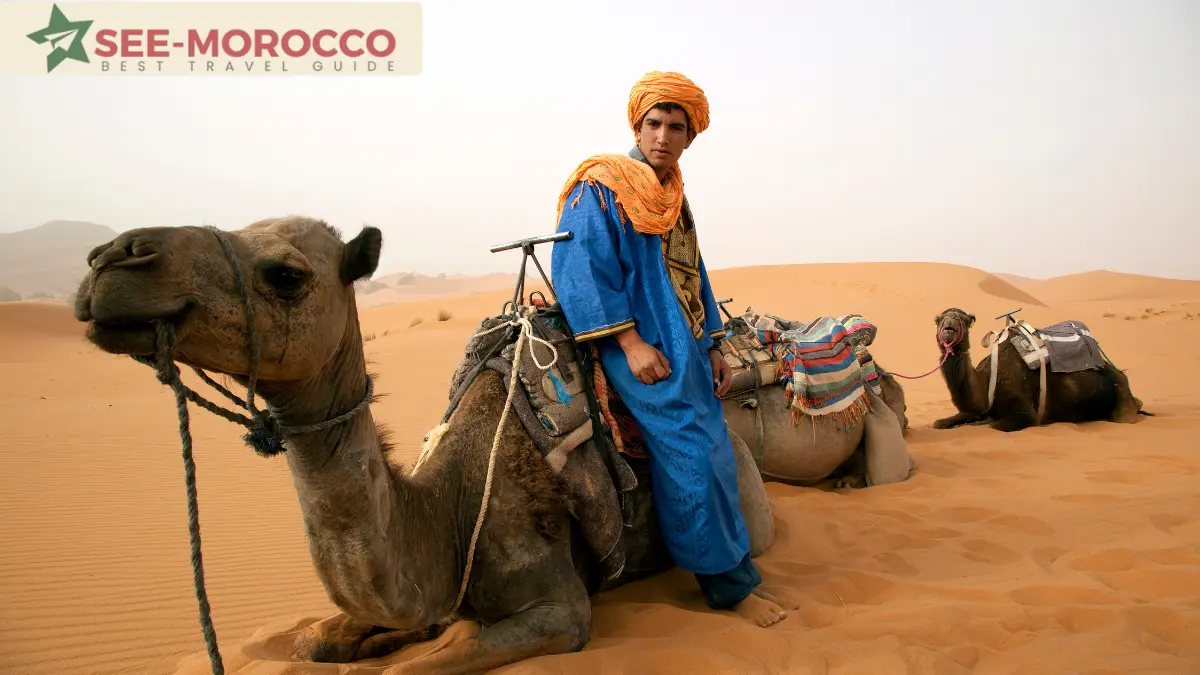
The camel ride is shorter than you imagine. Typically 1-1.5 hours each way to the camp. That’s enough — camels are not comfortable — but people expect a day-long caravan.
“Berber camp” means almost nothing. Every camp markets itself as authentic. The real difference is location (deep in the dunes vs at the edge), group size, and whether the staff actually come from the area.
Check what photo stops cost. Some roadside attractions on the southern routes work on the principle of inviting you in for free and charging on the way out. Agree on prices before, not after — for photos, for fossils in Erfoud, for “free” tea that precedes a carpet presentation.
One night is enough for most people. It sounds unromantic, but the desert experience — sunset, dinner, stars, sunrise — fits in one night. Add a second night only if you’re going to Chigaga or you specifically want a rest day in the sand.
Sahara from Ouarzazate
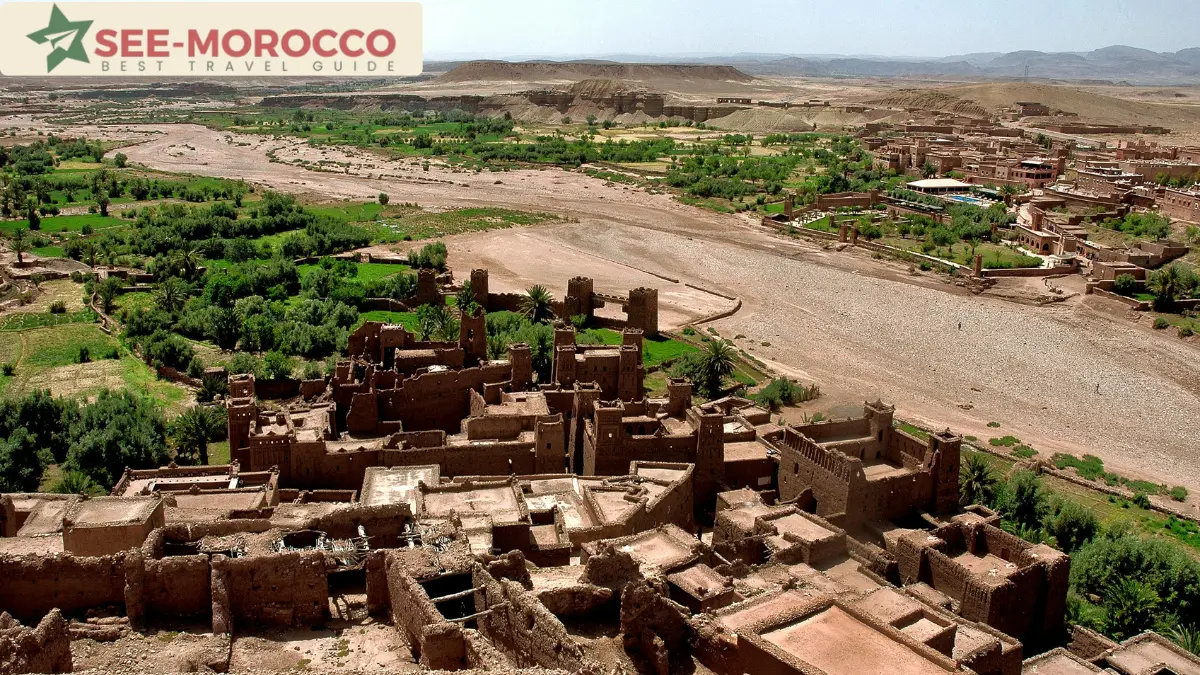
Because I’m from here, one piece of advice tours won’t give you: Ouarzazate works as a base, not just a lunch stop.
Staying a night here splits the long drive, lets you see Ait Benhaddou and the film studios properly, and puts you 6-7 hours from Merzouga instead of 10+ from Marrakech. Hotels here cost half of what Marrakech charges. If you’re building your own Morocco itinerary, the desert leg gets dramatically easier with a stop in my city.
What to Pack (the Short, Real List)
Layers, because the desert does both extremes in 24 hours. A scarf for sand and sun. Closed shoes for the camp (scorpions are rare but real). A power bank — camps run generators for limited hours. Cash, because there are no card machines in the dunes, and the last reliable ATMs are in Rissani/Erfoud (for Chebbi) or Zagora (for Chigaga). Wet wipes; standard camps have basic or shared bathrooms.
And less than you think. Your main bag stays at the hotel or in the vehicle — you take a small backpack to the camp.
Is the Morocco Desert Worth It?
Honestly: yes, with the right expectations. The same French couple I helped pull out of the mud told me about their trip afterward — the sunset over the dunes, the landscapes on the road south, the kindness of people along the way. They did Ouarzazate to the Sahara and back in a week and said it felt like two days. They’ve already decided to come back.
The Sahara night sky is something photographs don’t transmit. The silence at Chigaga, or the dune crest at Chebbi twenty minutes before sunrise, justify the long drives.
What disappoints people is never the desert itself. It’s booking the cheapest tour, expecting privacy in high season, or going in August. Plan around those three mistakes and the desert delivers. If you’re working out the budget for the whole trip, my full guide to visiting Morocco on a budget covers the rest of the numbers.
FAQ
What is the desert in Morocco called?
The Moroccan part of the Sahara. The two main dune fields tourists visit are Erg Chebbi (near Merzouga) and Erg Chigaga (past M’Hamid). “Erg” is the term for a sea of sand dunes.
How far is the Sahara from Marrakech?
Erg Chebbi is roughly 560km from Marrakech — 9-10 hours of driving over the Atlas. That’s why most tours take 3 days. There is no real sand desert close to Marrakech; the “desert” day trips from Marrakech go to Agafay, which is a rocky moonscape, not dunes.
Can you visit the Morocco desert in one day?
Not the real Sahara. The distances make it physically impossible from Marrakech. One-day “desert” trips go to Agafay. The minimum for Erg Chebbi is 3 days / 2 nights from Marrakech, or 2 days from Ouarzazate.
Which is better, Merzouga or Zagora?
Zagora is closer to Marrakech, and the 2-day Zagora tours are cheaper — but the dunes there are small and underwhelming. If you’ve come for the classic Sahara, the extra day to reach Merzouga (Erg Chebbi) is worth it. Zagora’s real value is as the gateway to Erg Chigaga.
How cold does the Morocco desert get at night?
In winter (December-February), below freezing is normal — expect anywhere from -3°C to +5°C at night in the dunes. Even in spring and autumn, nights drop to 5-10°C. Pack warm layers regardless of season.
Is the camel ride mandatory?
No. Most camps can be reached by 4×4, and you can ask for that instead. If you have back problems or simply don’t want an uncomfortable hour on a camel, say so when booking.
Is the Morocco desert safe?
The tourist desert circuit is very safe and heavily traveled. The genuine risks are environmental: heat in summer, cold in winter, rain turning oued crossings to mud in late winter, and driving fatigue on long road days. Choose operators with good recent reviews and avoid compressing the trip into too few days.
Do I need a guide for the Morocco desert?
For Erg Chebbi, no — you can reach Merzouga by bus and arrange everything locally. For Erg Chigaga, effectively yes: the final stretch is trackless off-road driving, and going without an experienced local driver is genuinely risky.